
Introduction
In recent years, Ethereum has emerged as a powerhouse in the blockchain industry, holding the second largest market cap next to Bitcoin. With a staggering average transaction volume surpassing $10 billion daily, Ethereum not only serves as a cryptocurrency but also as a platform for decentralized applications (dApps) and smart contracts. The token models of Ethereum play a crucial role in shaping how digital assets are created and managed.
With the global crypto market witnessing losses up to $4.1 billion due to security breaches in 2024, understanding Ethereum token models has never been more critical. This comprehensive guide will dissect various Ethereum token models, their significance, and how they impact the burgeoning Vietnamese crypto market.
What Are Ethereum Token Models?
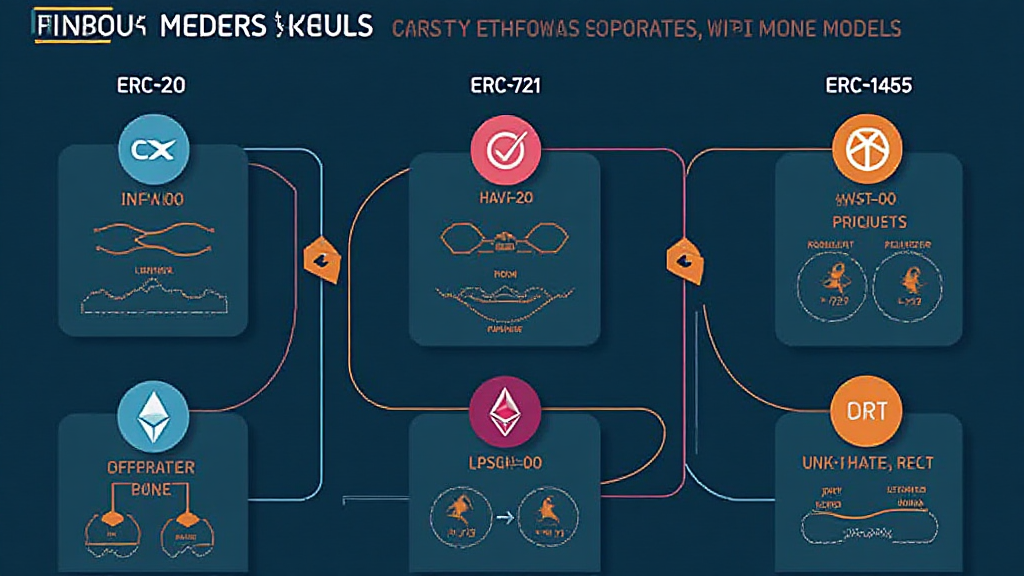
Ethereum token models are standardized protocols that allow the creation of fungible or non-fungible tokens (NFTs) on the Ethereum blockchain. The most prominent token standards are ERC-20, ERC-721, and ERC-1155. Each of these token models has unique features and use cases.
ERC-20 Tokens
The ERC-20 standard is the most widely used token model on Ethereum. Its developers added functions such as transfer, approve, and allowance to enable transactions that users can interact with. Some notable projects using ERC-20 tokens include:
- Chainlink (LINK): A decentralized oracle network connecting smart contracts with real-world data.
- Uniswap (UNI): A protocol for automated token exchange on Ethereum.
- USD Coin (USDC): A stablecoin pegged to the US dollar.
ERC-721 Tokens
In contrast to ERC-20, the ERC-721 standard allows for the creation of non-fungible tokens (NFTs). Each ERC-721 token is unique and cannot be exchanged on a one-to-one basis. Popular use cases include:
- CryptoKitties: A blockchain-based game that allows players to collect, breed, and sell unique virtual cats.
- Art Blocks: A platform for programmable art, where each NFT is generated using an algorithm.
ERC-1155 Tokens
The ERC-1155 standard is an improvement over the previous models, allowing for the creation of both fungible and non-fungible tokens within a single smart contract. This flexibility has led to increased efficiency in managing and trading multiple assets:
- Decentraland (MANA): A virtual reality platform where users can create, experience, and monetize content and applications.
- Enjin: A blockchain-based gaming platform that supports asset creation within games.
Tokenomics and Their Importance
Tokenomics refers to the economic model behind a cryptocurrency or token. For Ethereum token models, understanding tokenomics involves analyzing supply, demand, and the incentives created through tokens. Strong tokenomics foster user engagement and higher transaction volumes. The recent statistics show that Ethereum transaction counts are reaching over 1.5 million daily, demonstrating the importance of effective tokenomics in sustaining user interest and market activity.
Security Aspects of Ethereum Token Models
As the digital asset landscape evolves, security remains a paramount concern. Vietnam has seen a rapid increase in cryptocurrency users, reported at a 35% growth rate in 2023 alone. However, this growth comes with challenges, as vulnerabilities can compromise user assets. Developing secure token models is essential to protect users from potential exploits.
Common Vulnerabilities
Understanding common vulnerabilities can help developers create stronger security measures. Some of the most prevalent vulnerabilities include:
- Reentrancy Attacks: Exploits that occur when a function makes external calls to untrusted contracts before resolving internal states.
- Integer Overflows/Underflows: These can lead to erroneous calculations and unintended consequences.
Real-World Applications of Ethereum Token Models
The real-world applications of Ethereum token models span various sectors, demonstrating their versatility and potential for future adoption. For instance, Vietnam’s local communities are increasingly participating in tokenized projects, such as:
- Local Currencies: Tokens can be created for local businesses, serving as an alternative currency.
- Crowdfunding: Projects can raise funds through token sales, giving investors access to innovative startups.
Future of Ethereum Token Models in Vietnam
The future of Ethereum token models looks promising, especially in developing markets like Vietnam. As users become more educated about cryptocurrency and blockchain, the proliferation of token projects is expected to continue growing. With government regulations becoming clearer, users will feel more secure engaging in blockchain initiatives.
Predicted Trends
Some trends we anticipate include:
- Increased Adoption: More Vietnamese businesses will implement Ethereum tokens into their models.
- Enhanced Security Protocols: Developers will focus on creating more robust smart contracts to mitigate vulnerabilities.
Conclusion
In closing, the Ethereum token models represent a significant advancement in the cryptocurrency landscape. Understanding these models is vital for anyone involved in the market, especially in rapidly developing regions like Vietnam. With the right knowledge and tools, users can seize opportunities for growth while ensuring their digital assets remain secure. As we move towards a more blockchain-centric world, staying informed and adapting to changes will be crucial for success.
For additional insights, please visit cryptopaynetcoin.